
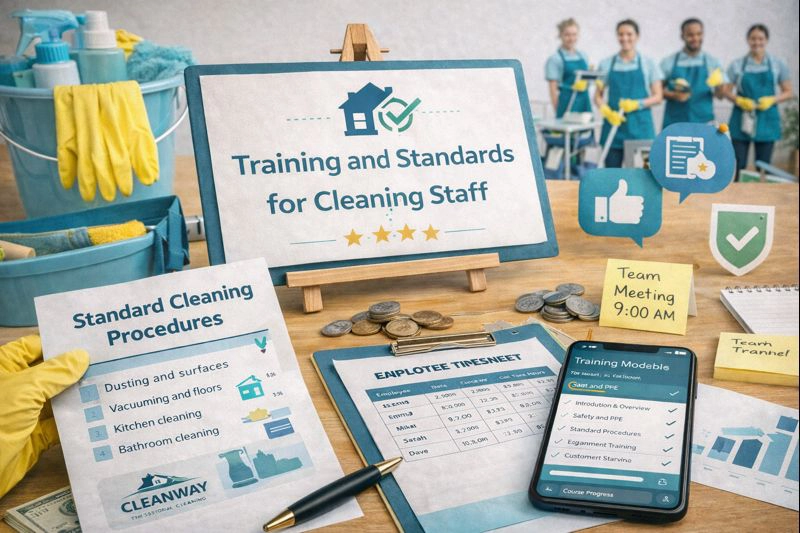
Why Training and Standards Are Critical
In the cleaning industry, quality depends directly on people.
Training and standards ensure that every cleaner performs work consistently, regardless of experience level.
Creating Cleaning Standards
Cleaning standards define what “good work” looks like.
- Room-by-room cleaning requirements
- Approved products and equipment
- Time expectations per task
- Safety and hygiene rules
Standard Operating Procedures (SOPs)
SOPs provide step-by-step instructions for cleaning tasks.
- Residential cleaning SOPs
- Commercial cleaning SOPs
- Deep cleaning procedures
- Move-in / move-out standards
Written SOPs reduce errors and training time.
Onboarding New Cleaning Staff
A structured onboarding process improves performance and retention.
- Company policies and expectations
- Safety training and chemical handling
- Client interaction guidelines
- Shadowing experienced staff
Hands-On Training
Practical training is essential in cleaning services.
- Demonstrate correct cleaning techniques
- Practice under supervision
- Provide immediate feedback
Health, Safety, and Compliance
Cleaning staff must follow safety regulations.
- Proper use of cleaning chemicals
- Personal protective equipment (PPE)
- OSHA safety guidelines
- Injury prevention procedures
Quality Control Through Training
Training supports quality assurance.
- Cleaning checklists
- Inspection routines
- Performance feedback loops
Ongoing Training and Skill Development
Training should not stop after onboarding.
- Refresher training sessions
- New product or equipment training
- Updated standards and procedures
Training Documentation
Documenting training protects the business.
- Signed training acknowledgements
- Updated SOP manuals
- Safety training records
Conclusion
Training and standards are the foundation of a professional cleaning business in the USA. By investing in structured onboarding, clear procedures, and ongoing education, cleaning businesses can deliver consistent quality, reduce issues, and scale successfully in 2025.